
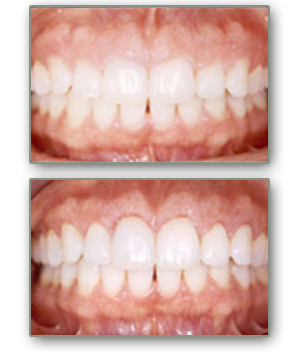
Many patients with what they call a “gummy smile” often believe their teeth are just short. However, the real issue is frequently excessive gum tissue covering the enamel. This excess gum tissue hides part of the tooth, leading to the appearance of a gummy smile. Crown lengthening is a procedure that reshapes or recontours both bone and gum tissue to reveal more of the natural tooth.
Excess gum tissue not only makes teeth look shorter than they really are but can also increase the risk of gum infections. By carefully removing this extra tissue, we can restore a healthy, balanced gum line and enhance the overall beauty of your smile.
Request an AppointmentThis cosmetic treatment can be applied to just one tooth, several teeth, or the entire gum line to reveal a more attractive, harmonious smile.
Patients diagnosed with “altered passive eruption” often have gums that cover more of the tooth due to excessive bone height or thickness. By repositioning the gums to the cementoenamel junction (CEJ), we can achieve a noticeable improvement in your smile’s appearance. Our skilled cosmetic dentists understand how the gums frame your teeth and work carefully to evaluate every aspect of your smile for the best results.
Crown Lengthening
Crown lengthening serves many purposes, from improving gum health to preparing your mouth for restorative or cosmetic dental work.
Why is crown lengthening performed?
This versatile procedure addresses multiple concerns and is well-loved by many patients who have experienced its benefits.
What happens during crown lengthening?
Dr. Simone will assess the exact amount of tissue needing removal and will refer you to one of our trusted periodontists—Dr. Gifford or Dr. Trylovich—who will perform the surgery. Typically done under local anesthesia, the procedure length depends on how many teeth are involved and whether bone removal is necessary.
Small incisions are made around the gums to gently separate them from the teeth. Even if only one tooth requires reshaping, nearby teeth are often treated to maintain a natural, even gum line. This access allows the dentist to see the tooth roots and surrounding bone.
Sometimes just soft tissue removal is enough to expose more tooth for a crown. Other times, a bit of bone must be carefully removed using hand and rotary instruments similar to those used for cavity treatment.
Once the teeth have sufficient exposure, the surgical area is cleaned and sutured with fine stitches. You’ll notice your teeth look longer right after surgery due to the repositioned gums.
To protect the area, Dr. Simone applies an intraoral periodontal bandage to aid healing and prevent infection. We may provide prescriptions for pain relief and recommend a chlorhexidine mouth rinse to minimize bacteria. Healing usually takes about two to three months.
Request an Appointment